CertainTeed Attic Insulation in Trabuco Canyon: A Homeowner’s Guide
CertainTeed attic insulation in Trabuco Canyon costs roughly $1.10 to $2.40 per square foot installed for blown-in fiberglass, depending on R-value depth and attic access. The brand earns its place in canyon homes because certain formulations, particularly Sustainable Insulation, are engineered to resist moisture absorption better than commodity fiberglass, which matters when Trabuco Canyon humidity pushes past 70 percent during marine layer season. If you’d rather not sort through product specs on your own, call Legend Insulation home at (877) 679-4725 and we’ll match the right CertainTeed product to your attic’s actual conditions.
Most brand guides read like marketing copy because they are. This one starts from the opposite direction: here’s what a Trabuco Canyon attic actually demands, and here’s where CertainTeed’s product specs align with those demands, and where they don’t.
What Trabuco Canyon Attics Actually Put Insulation Through
Trabuco Canyon sits far enough inland to catch real summer heat, often ten to fifteen degrees warmer than coastal Orange County cities like San Clemente or Dana Point. But it also gets the tail end of marine layer intrusion, especially in June and into July, and late-summer monsoon humidity that creeps up the canyon from the southeast. An attic here swings between 120-degree daytime heat and cool, damp overnight air that condenses on exposed surfaces. Insulation in this space isn’t just holding back temperature; it’s managing a moisture cycle.
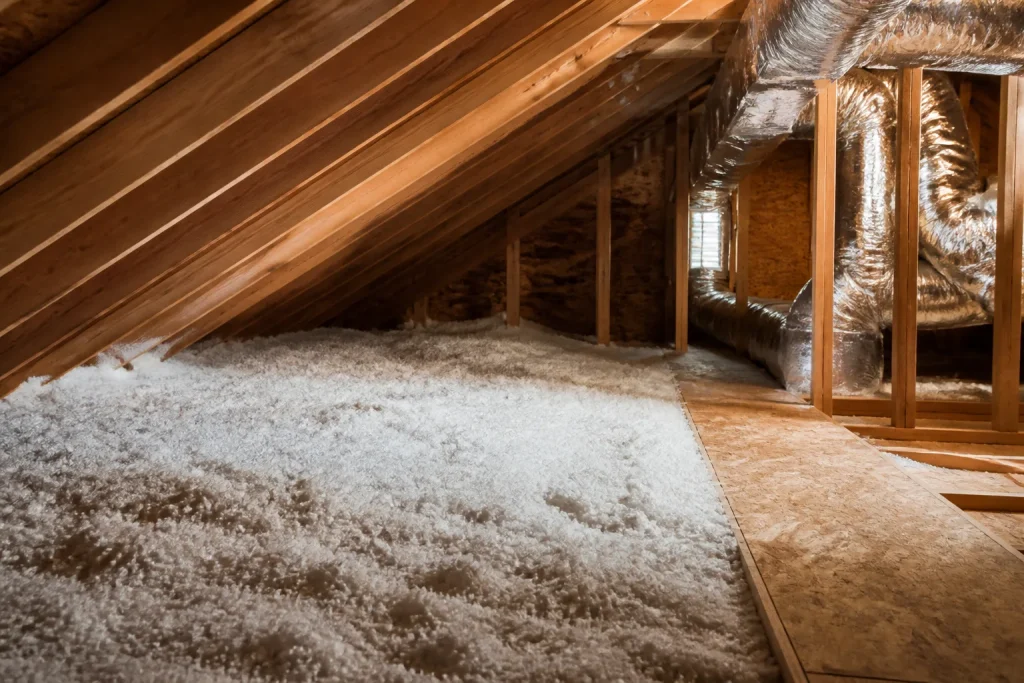
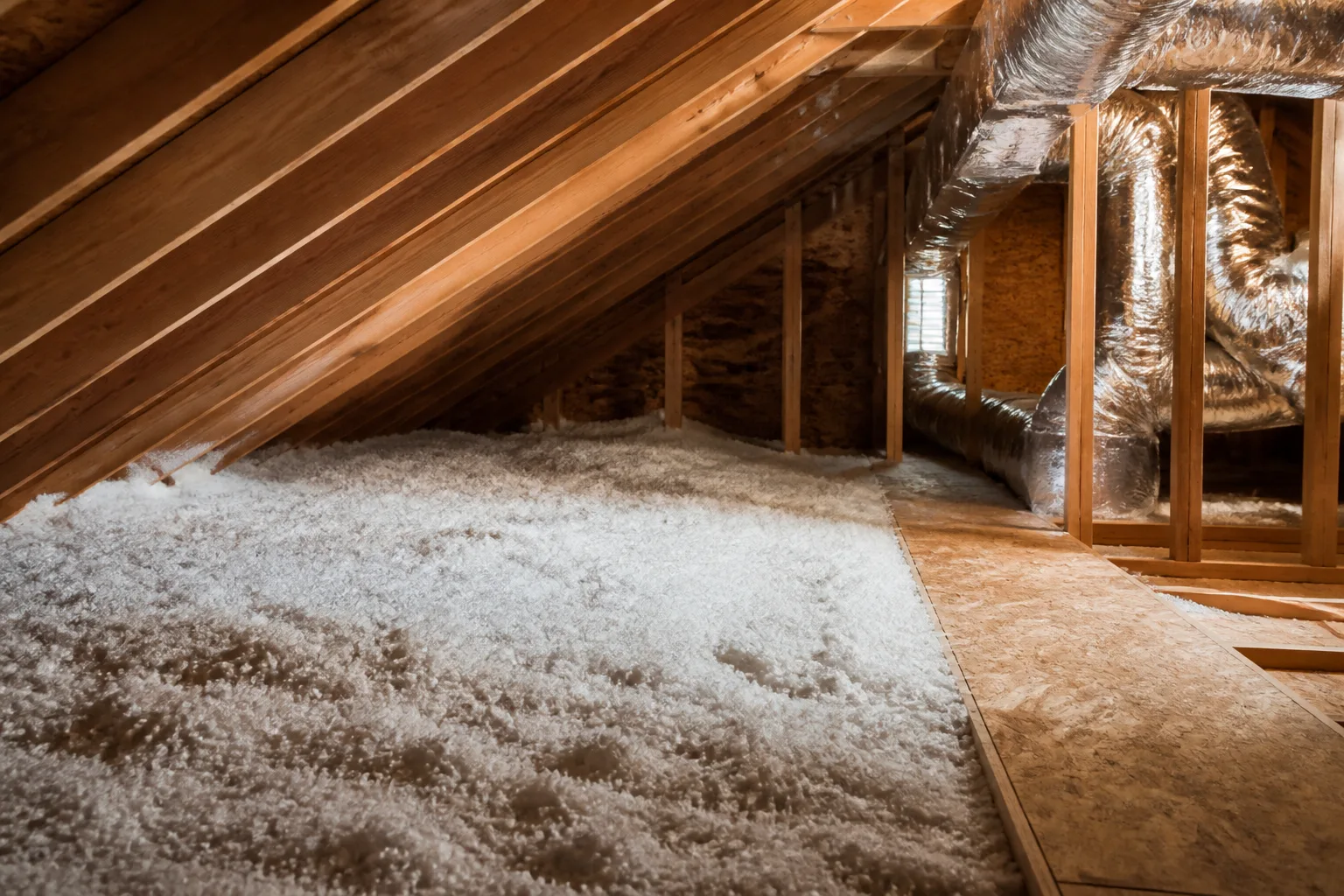
We’ve pulled fiberglass out of Trabuco Canyon attics that had compacted from repeated humidity exposure. The top layer looked fine. The bottom six inches had settled into a dense, damp mat that was doing almost nothing. That’s not a brand failure, it’s a product mismatch. Loose-fill insulation with open air pockets absorbs or traps moisture differently than denser, resin-bonded fiberglass. CertainTeed’s Sustainable Insulation line is specifically formulated with a moisture-resistant binder, which is why we specify it for canyon homes more often than other blown fiberglass products.
Breaking Down CertainTeed’s Attic Product Lines
CertainTeed isn’t one product. It’s a portfolio, and the wrong choice for your attic geometry will underperform even if the brand name on the bag is respected. Here are the three CertainTeed lines you’ll most likely encounter for Trabuco Canyon attic work:
- Sustainable Insulation (blown-in fiberglass): This is the workhorse for open attic floors in Trabuco Canyon, particularly in older ranch homes in Robinson Ranch and Trabuco Highlands where attic trusses are standard and venting is already in place. It’s made with a high recycled glass content and, critically for canyon humidity, a moisture-resistant binder. We specify it at R-38 minimum in this climate, often R-49 on homes with HVAC equipment in the attic.
- ProCat (batt insulation): ProCat is a dense, highly compressed batt that expands to fill cavities. It’s the right call for knee walls, vaulted ceiling sections, and attic hatches where blown material won’t hold position. CertainTeed offers ProCat in high-density R-15 and R-21 variants for 2×4 and 2×6 framing. In Trabuco Canyon homes with finished attic bonus rooms or half-walls, b atts solve a geometry problem that blowing machines can’t.
- SmartBatt (alternate batt line): SmartBatt uses a different manufacturing process and is available in some regional distribution, though it’s less common in Southern California supply chains. Where ProCat emphasizes density and compression fit, SmartBatt focuses on handling comfort and dust reduction. Both are legitimate. We default to ProCat for canyon attic cavities because the compression fit helps seal against air movement in older, irregular framing.
One honest note: CertainTeed does not manufacture spray foam. If your Trabuco Canyon attic needs air sealing at the roofline, meaning a conditioned attic conversion, you’d be looking at Spray Foam Insulation in Trabuco Canyon from Icynene or Demilec, not CertainTeed. CertainTeed’s strength is fiberglass, and in the right attic, that’s all you need.
Blown vs. Batt in Trabuco Canyon Attic Geometry
Trabuco Canyon housing stock is not uniform. The newer Toll Brothers and Lennar communities in the northern canyon have truss attics that take blown insulation cleanly. But drive through the older sections, the 1970s and 1980s ranch homes off Live Oak Canyon Road and Trabuco Creek Road, and you’ll find attics with low-pitch roofs, cramped access hatches, knee walls, and framing irregularities that make a blower hose more complicated than it’s worth in certain sections.
Here’s how we think about it on site:
- Open attic floor, vented attic, standard trusses: Blown Sustainable Insulation, R-38 to R-49. Fastest coverage, best cost per R-value, and the product’s moisture-resistant binder handles canyon humidity better than standard blown fiberglass.
- Knee walls, vaulted sections, bonus room ceilings: ProCat batts, friction-fit or mechanically fastened. Batt insulation doesn’t slump in vertical or sloped cavities the way blown material eventually will.
- Attic hatch and access door: ProCat batt attached to the hatch panel, plus weatherstripping around the frame. The hatch is one of the biggest air leaks in any Trabuco Canyon attic, and it’s often overlooked entirely.
- Attic with old, compacted insulation: Existing material removed, attic floor checked for rodent damage and electrical issues, then new blown insulation installed to code depth. Removing rather than topping off is the only way to address the compressed mat problem we described earlier.
If you’re comparing bids, ask the installer which CertainTeed product they’re specifying and why. If they can’t answer that question in one sentence, they’re likely blowing whatever’s on the truck.
The Moisture Question: What CertainTeed’s Specs Actually Say
Trabuco Canyon’s moisture profile is the reason generic blown fiberglass underperforms here. When insulation absorbs moisture, its R-value drops. A damp R-38 attic isn’t performing at R-38. It might be performing at R-28 or worse, and it’s also creating conditions where mold and dust mites can establish themselves.
CertainTeed’s Sustainable Insulation is manufactured with a moisture-resistant binder that helps the material resist water absorption during periods of high humidity. This isn’t a waterproofing claim and it doesn’t mean the product can sit in standing water. But compared to fiberglass with a standard binder, the difference in a Trabuco Canyon attic is measurable. The material holds its loft better through humidity swings, which means it holds its R-value longer.
We’ve seen this play out in attics across Robinson Ranch and Wagon Wheel. Homes with standard blown fiberglass that’s been in place for eight or ten years often show visible compaction and a musty odor during fall. Homes with the moisture-resistant formulation hold their depth better. That’s not marketing language; it’s what we observe pulling samples from attic after attic.
If moisture intrusion from the roof itself is a factor, insulation isn’t the fix. That’s a roofing issue. But for ambient humidity breaching the attic through vents and gable ends, product choice does make a difference.
What a Proper CertainTeed Install in Trabuco Canyon Actually Includes
The bag of insulation is about half the job. A proper CertainTeed attic installation in Trabuco Canyon includes several steps that low-bid installers skip, and skipping them is why some homeowners end up paying for insulation twice.
- Attic prep and inspection: Before any insulation goes in, the attic should be checked for rodent activity, existing moisture damage, recessed can lights that need covers, bathroom fans venting into the attic instead of outside, and any electrical boxes that need insulation shields. We’ve found exhaust fans venting directly into attics in Trabuco Canyon homes built as recently as the 2000s.
- Air sealing: This is the step that separates an insulation install from an insulation system. Gaps around plumbing stacks, wiring penetrations, top plates, and the attic hatch should be sealed with foam or caulk before insulation is applied. Blown insulation without air sealing is like a down jacket with the zipper open.
- Depth verification: CertainTeed insulation performs at its rated R-value only when installed to the correct depth. For Sustainable Insulation, that’s typically 12 to 14 inches for R-38 and 15 to 18 inches for R-49. A proper install includes depth markers or measurement verification. If the crew doesn’t check depth, you don’t know what R-value you actually bought.
- Ventilation check: Attic insulation should never block soffit vents. Baffles or vent chutes installed at the eave line keep airflow moving while insulation covers the attic floor. In Trabuco Canyon, adequate ventilation is what allows moisture-resistant insulation to do its job instead of trapping the humidity it’s designed to tolerate.
If you’re getting a quote that doesn’t mention air sealing or ventilation, it’s not a comparison quote. It’s a different job.
What happens when you call
- 1
A real person answersNo phone trees — you reach a local pro.
- 2
You get an upfront price rangeHonest numbers before anyone is dispatched.
- 3
A background-checked tech heads outLicensed & insured, dispatched right away.
- 4
You approve before work beginsNothing starts until you say go.
Questions to Ask Any Installer Claiming to Use CertainTeed
CertainTeed is a recognized brand, which means some contractors will put the name on an estimate and then install whatever generic material is cheapest at the supply house. Here are five questions that will flush that out quickly:
- “Which specific CertainTeed product are you specifying?” If they say “CertainTeed insulation” and can’t name Sustainable Insulation, ProCat, or another specific line, they’re not actually thinking about your attic conditions.
- “What R-value are you installing, and how many inches does that require?” R-value and depth are directly related. If the answer is vague, the install will be vague.
- “Will you show me the bags on site before installation?” A legitimate installer has no problem with this. CertainTeed packaging is clearly marked.
- “Are you air sealing before you insulate?” If the answer is no, keep looking. Air sealing is non-negotiable for attic performance in Trabuco Canyon.
- “Do you install baffles at the soffit vents?” If they don’t know what a baffle is, that’s your answer.
And one honest note from our side: we carry CertainTeed, but we also carry Blown In Insulation in Trabuco Canyon products from Knauf, Johns Manville, and Owens Corning, plus Attic Insulation in Trabuco Canyon in Rockwool where fire resistance or acoustics are the priority. The right answer for your attic isn’t always CertainTeed, and any installer who tells you it always is should be asked harder questions.
When to Call a Pro
Attic insulation looks simple until you’re in an attic on a July afternoon in Trabuco Canyon when the space is 120 degrees. Between the heat, the pests, the sharp truss edges, and the very real risk of stepping through a ceiling, this is one project where DIY savings evaporate quickly. Blown-in insulation requires a machine and two people, minimum. Batt insulation in tight attics requires knowledge of where not to compress material and where ventilation must be preserved. We’ve fixed enough DIY installs to say this plainly: a weekend project that goes wrong up there costs more than the labor you were trying to avoid.
The Bottom Line
CertainTeed makes legitimate products, and in Trabuco Canyon, the moisture-resistant binder in their Sustainable Insulation line addresses a real local condition that generic blown fiberglass doesn’t handle as well. But the brand on the bag matters less than the installer’s ability to match product to attic geometry, air seal properly, verify depth, and protect ventilation. If you’re in Trabuco Canyon and want an honest assessment of what your attic needs, Legend Insulation offers free estimates. Call (877) 679-4725 and we’ll walk the attic with you, explain what we’re seeing, and recommend the right material, CertainTeed or otherwise, for the job.
Frequently Asked Questions
Expect to pay roughly $1.10 to $2.40 per square foot installed for blown-in CertainTeed Sustainable Insulation, with most Trabuco Canyon attics landing between $1,800 and $4,500 total depending on square footage, access difficulty, and whether old insulation needs removal first. Call (877) 679-4725 for a free, on-site estimate.
CertainTeed’s Sustainable Insulation uses a moisture-resistant binder that holds loft better through humidity swings than standard-binder fiberglass does. In Trabuco Canyon, where marine layer and monsoon patterns push attic humidity up, that formulation has measurable advantages over commodity blown fiberglass.
Technically yes, which means blowing fiberglass into an open attic is possible for a determined homeowner with equipment rental and a second pair of hands. But air sealing, ventilation baffles, depth verification, and working in 120-degree attic heat make this a project where professional installation is worth the labor cost in most cases.
It depends on your attic geometry. Open truss floors take blown-in well. Knee walls, vaulted sections, and attic hatches need batt insulation to hold position. Many Trabuco Canyon attics need both. A proper site assessment determines the split.
Written by the team at Legend Insulation, serving Trabuco Canyon since 2015.
Need Insulation Help?
Call Legend Insulation — licensed & insured, here with fast after-hours help in Trabuco Canyon.
(877) 679-4725