
Trusted Spray Foam Insulation for Trabuco Canyon Homeowners
Spray foam insulation in Trabuco Canyon typically runs $2.50 to $7.00 per square foot installed, with most whole-attic jobs landing between $3,800 and $9,500 depending on foam type and depth. The real question most canyon homeowners ask us isn’t about price first. It’s why their upstairs bedrooms stay ten degrees warmer than the downstairs every August. The answer is almost always the same: the thermal envelope leaks, and the attic is the biggest offender. At Legend Insulation, we specialize in one trade and one trade only, so when we tell you spray foam is or isn’t the right fix, that recommendation comes from someone who installs every major insulation method, not just the one on our truck. Call (877) 679-4725 for a straight answer and a free estimate.
Closed Cell Spray Foam Insulation
Closed Cell Spray Foam Insulation is a dense, rigid foam that cures to roughly 2 inches of insulation per applied inch and adds measurable structural strength to whatever it’s sprayed against. We reach for closed cell in Trabuco Canyon when a homeowner has moisture concerns, wants air sealing plus a vapor barrier in one step, or needs high R-value in a tight space where open cell would need twice the room to hit the same performance. See our Spray Foam Insulation in Trabuco Canyon for more on where we use it. Closed cell runs $3.50 to $7.00 per board foot in this market, and Nolan Cassidy’s crews use Demilec and Icynene closed cell systems for most applications.
Where Closed Cell Earns Its Cost
Crawl spaces, rim joists, and metal buildings are where closed cell separates itself. The material blocks bulk water, resists mold growth, and won’t sag or settle the way some insulation can over time. In canyon homes with older foundations, closed cell at the rim joist stops the stack effect that pulls hot outside air up through the walls in summer.
When to Skip Closed Cell
If you’re insulating an open attic with no moisture issues and you want maximum coverage per dollar, open cell often does the job for less. We’ll tell you that up front. The goal is the right material for the space, not the highest ticket.
Open Cell Spray Foam
Open Cell Spray Foam is a lighter, spongier foam that expands aggressively on application, filling every crack, seam, and odd-shaped cavity it touches. It’s the workhorse for attic rooflines and interior walls in Trabuco Canyon, delivering an air seal that fiberglass simply cannot match. Open cell runs $2.50 to $4.50 per board foot installed, and we’ve used it to cut summer cooling loads in hundreds of canyon homes where the attic was acting like a solar oven. The Icynene open cell system is a go-to for us because of its consistent expansion and low odor after cure.
Air Sealing Is the Real Win
The R-value matters, but the reason open cell changes how a house feels is the air barrier. Most heat gain in canyon homes enters through gaps and bypasses, not through the insulation itself. Foam seals those pathways. Fiberglass doesn’t, and that’s a difference you can feel within a day of installation.
Open Cell in Attic Roof Decks
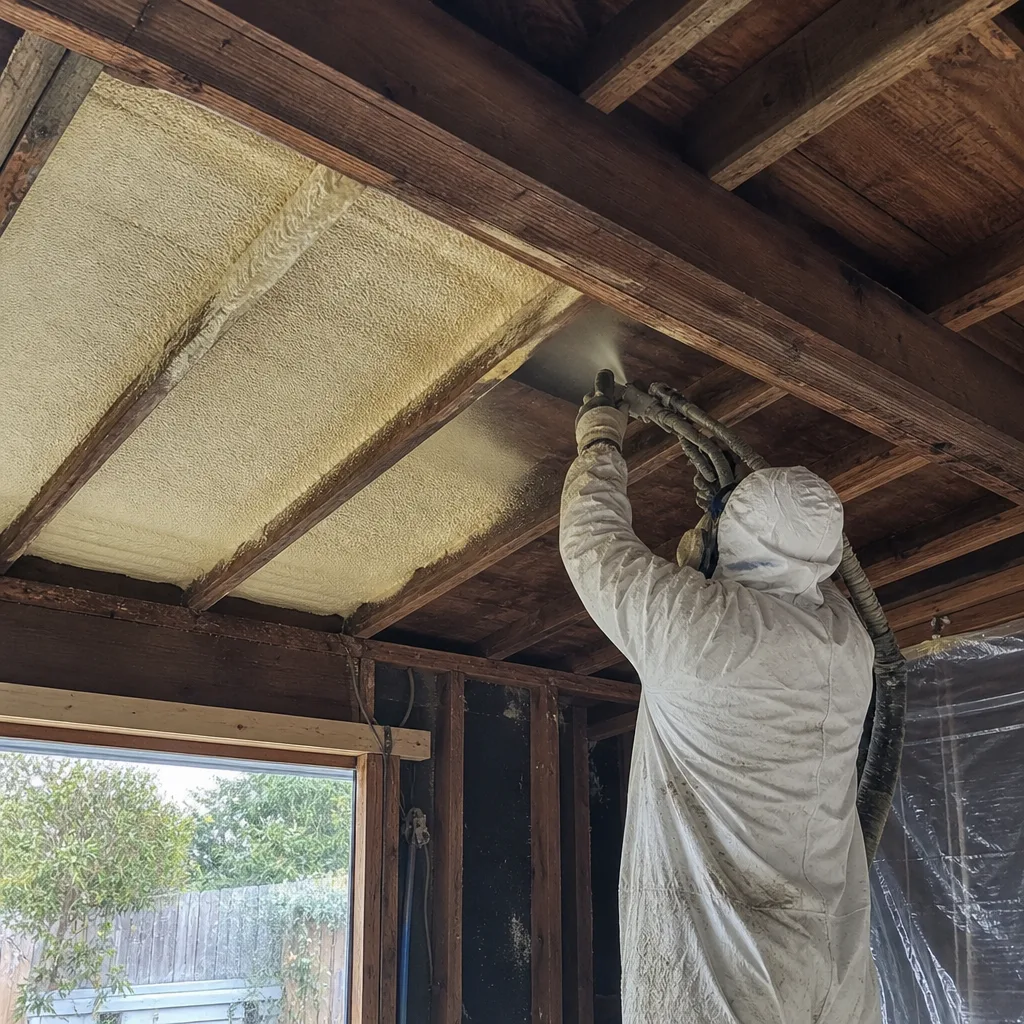
Spraying the roofline instead of the attic floor turns the attic into conditioned space, which matters if your HVAC ducts run through the attic. Those ducts stop losing cool air to a 130-degree attic. The result is a quieter system, lower bills, and a noticeably more even temperature between floors.
Spray Foam Insulation Contractors
Spray Foam Insulation Contractors vary wildly in what they actually know. Some are general contractors who picked up a foam rig last year. Others are single-brand shops who’ll tell you their one foam is right for every scenario because it’s all they can sell. Legend Insulation falls into neither bucket: we’re a dedicated insulation contractor with certifications in Icynene and Demilec systems, plus full capability in fiberglass, Rockwool, and cellulose. That breadth matters when you’re deciding between open and closed cell, or between foam and a mineral wool approach for a fire-rated wall assembly.
The Difference a Specialist Makes
Foam chemistry is sensitive. Temperature, substrate moisture, and mixing ratios all affect how the foam cures and whether it bonds properly. A crew that does insulation daily, not as a side line, has seen the failures and knows how to avoid them. Nolan Cassidy runs every Legend Insulation project with that standard, and his crews install foam year-round in Trabuco Canyon, not just when siding work is slow.
What to Ask Any Foam Contractor
Ask what brands they’re certified in. Ask whether they’ll show you the density after cure. Ask if they carry alternatives to foam, because a contractor with options is one who’s recommending honestly. We carry eight major brands across every category, so our foam recommendation survives that test.
Spray Foam Attic Insulation
Spray Foam Attic Insulation is the highest-impact upgrade most Trabuco Canyon homes can make, because the attic is where the house loses the most conditioned air and gains the most radiant heat. In canyon neighborhoods like Robinson Ranch and Trabuco Highlands, we routinely measure attic temperatures above 130 degrees in July. Foam at the roofline drops that dramatically, and the difference shows up in the next bill. Typical attic foam projects here run $4,000 to $9,500 for a full roofline treatment, with partial open cell jobs starting lower.
Roofline vs. Attic Floor
Spraying the roofline creates a conditioned attic; insulating the floor keeps heat out of the living space but leaves the attic itself blazing. If your furnace or ducts sit in the attic, the roofline approach almost always wins. If the attic is empty and well-vented, floor insulation can be the smarter spend, and we’ll help you make that call honestly.
Ductwork and Air Quality
Ducts running through a foamed attic stop sweating and stop pulling 130-degree air into the system’s return path. That means less dust, less humidity, and air that’s actually the temperature your thermostat says it is. For homes with allergies or uneven cooling, this is one of the most underrated benefits of foam.
Spray Foam Wall Insulation
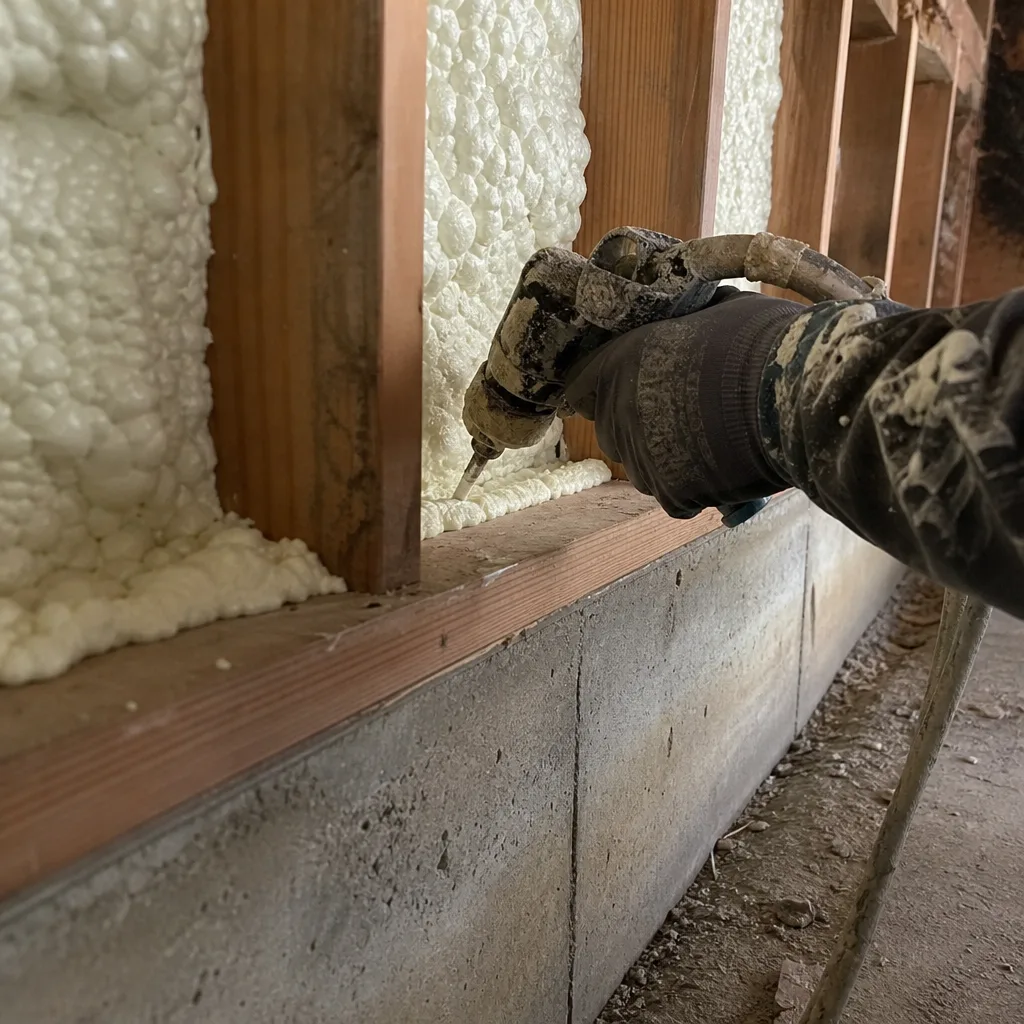
Spray Foam Wall Insulation is the answer when you’re opening walls for a remodel and you don’t want to put the same underperforming fiberglass back in. It’s also the right call for new construction in Trabuco Canyon, where homeowners and builders can hit energy code targets with thinner wall profiles than fiberglass would allow. Wall foam typically runs $3.00 to $6.00 per square foot of wall area, and both open and closed cell options work here depending on moisture exposure and budget. Remodels in older canyon homes often expose walls with nothing in them at all, which explains a lot about the drafts homeowners feel at night.
Remodel-Phase Application
The time to foam walls is when they’re open. Once drywall goes back up, the cost to retrofit jumps significantly. If you’re already down to studs for electrical or plumbing work in Trabuco Canyon, adding foam at that stage is the cheapest way you’ll ever buy that level of performance.
New Construction and Code
California’s energy code pushes builders toward continuous insulation and tighter air sealing. Foam delivers both in one pass, and our crews work with remodelers and custom builders across Rancho Santa Margarita and Portola Hills who want a reliable insulation sub that shows up when the schedule says they will.
Rim Joist Spray Foam
Rim Joist Spray Foam is the most cost-effective single-target air sealing job you can do in a Trabuco Canyon home. The rim joist is the band of wood where your floor framing meets the foundation wall, and in most houses it’s barely insulated at all. That gap pulls outside air into the house through the stack effect, and in canyon homes with crawl spaces, it’s often the single biggest airflow leak. Rim joist foam jobs typically run $1,500 to $3,500 depending on home size and access, and closed cell is the standard choice here because it handles ground moisture contact without degrading.
The Stack Effect, Explained Simply
Warm air rises and escapes through the attic, which pulls outside air in at the bottom of the house. The rim joist is that bottom entry point. Sealing it with closed cell foam interrupts the cycle, which is why this one job often makes a crawl space stop smelling musty within days. It’s a small job with an outsized comfort return.
Closed Cell Is the Standard Here
Open cell absorbs water, and rim joists live close to the soil. We use closed cell Demilec foam for rim joist work because it provides both the air seal and the moisture resistance this location needs. Anything less risks trapping dampness against the framing, which is exactly what you don’t want.
Crawl Space Spray Foam Insulation
Crawl Space Spray Foam Insulation addresses a problem most Trabuco Canyon homeowners never see but feel constantly: cold floors in winter, musty air in the living room, and cooling bills that don’t match the square footage. Canyon homes with vented crawl spaces pull damp, unconditioned outside air under the house, and that air ends up inside through every gap in the floor assembly. Foam on the crawl space walls or floor framing, depending on whether you encapsulate, runs $2,800 to $7,500 for a typical canyon home. We’ve worked in older Trabuco Canyon builds where the floor insulation had fallen away entirely, leaving nothing between the living room and the dirt.
Encapsulation vs. Floor Insulation
Encapsulating the crawl space means foaming the foundation walls and sealing the vents, turning the space into a dry, conditioned area. Insulating the floor means foaming between the floor joists. Encapsulation costs more up front but stops moisture at the source and usually wins for long-term comfort and air quality in our experience.
What Foam Does That Fiberglass Can’t
Fiberglass batts in a damp crawl space sag, hold moisture, and become rodent housing. Closed cell foam bonds to the substrate and won’t absorb water, which is why it’s become the standard for crawl space work across Spray Foam Insulation – Foothill Ranch and Lake Forest. When a crawl space smells musty, the fix is almost never more fiberglass.
Garage Spray Foam Insulation
Garage Spray Foam Insulation turns a space most people write off as uninhabitable into a room that’s actually comfortable, whether you’re parking cars, running a home gym, or storing things that shouldn’t bake at 110 degrees. Garages in Trabuco Canyon get brutal in summer, especially west-facing ones with no shade. Foam on the shared wall between garage and house, plus the ceiling if there’s a room above, runs $1,800 to $5,000 depending on surface area. For detached garages or workshops, foaming the whole shell makes them usable year-round and quiets the noise that escapes to neighbors.
The Shared Wall Fix
The wall between your garage and living space is often insulated with nothing more than a thin fiberglass batt, and the garage side is usually uninsulated drywall. Foaming that shared wall stops garage heat from bleeding into the house, which is why some homeowners notice their adjacent bedroom finally cools down after this job. It’s a targeted fix with an immediate, feelable result.
Bonus: Sound Dampening
Open cell foam absorbs sound better than most people expect. If you run a saw, a compressor, or a drum set in the garage, foaming the walls and ceiling cuts the sound that leaks out. We get that request regularly from Trabuco Canyon homeowners with home workshops, and open cell Icynene handles it well while still delivering the thermal performance the space needs.
Brands We Service
Legend Insulation carries and installs Icynene and Demilec spray foam systems, which covers both the open cell and closed cell performance tiers with two of the most trusted names in the industry. Our crews are certified in both systems, and we choose between them based on the application, not based on which manufacturer we’re trying to push this month. That’s the benefit of being material-neutral: the foam recommendation is always tied to the problem in your specific Trabuco Canyon home.
Beyond foam, we stock Rockwool mineral wool, CertainTeed fiberglass, and Knauf products, which means if we tell you foam isn’t the right call for a particular space, we have the alternatives to back that up. Fire-rated wall assemblies, acoustic treatments, and budget-driven attic jobs all push toward different materials, and we install all of them. Whether you have a specific brand preference or you want us to recommend what performs, we can help.
Signs You Need a Pro Right Now
- Upstairs rooms that won’t cool down. Heat rises, and your attic is the source. If the upstairs runs eight to ten degrees warmer than downstairs in summer, the thermal envelope at the attic level is failing, and spray foam is usually the most direct fix.
- Energy bills that spiked without a lifestyle change. Canyon homes pay a real cost for leaky attics. If your bill jumped and you didn’t add a second fridge or a hot tub, the building envelope is the best suspect. Air leaks don’t fix themselves.
- Drafts near baseboards and outlets on exterior walls. That’s air bypassing the wall cavity entirely, which means your wall insulation isn’t doing its job. Foam at the rim joist and around the wall cavities stops the airflow that fiberglass lets through.
- Musty smell that won’t leave, especially near the crawl space. Damp air from an unsealed crawl space rises into the house through the floor assembly. Closed cell foam on the crawl space walls or joists cuts the moisture pathway and the smell usually disappears with it.
- Visible fiberglass batts sagging or falling in the crawl space or attic. Sagging insulation means it’s holding moisture or the install was never right to begin with. This is a performance failure you can see with a flashlight. The replacement conversation should include foam, not just new batts.
Our Process, Step by Step
- 1
Walkthrough and measurement. We start by examining the specific spaces you want addressed, measuring square footage, checking for existing insulation, and noting moisture issues, access limitations, or anything else that could affect the foam’s performance. This is also when we ask about your comfort complaints, which usually point us to the real problem faster than a tape measure does.
- 2
Material recommendation. Based on what we find, we recommend open cell, closed cell, or sometimes a non-foam alternative like Rockwool for specific scenarios. You get a written recommendation that explains the why, not just a number. Nolan Cassidy reviews every recommendation that goes out.
- 3
Prep and protection. On install day, we cover floors, seal off the work area, and protect surfaces from overspray. Foam sticks to almost everything, so containment matters. We also verify substrate temperatures and moisture levels before spraying, because both affect how the foam cures.
- 4
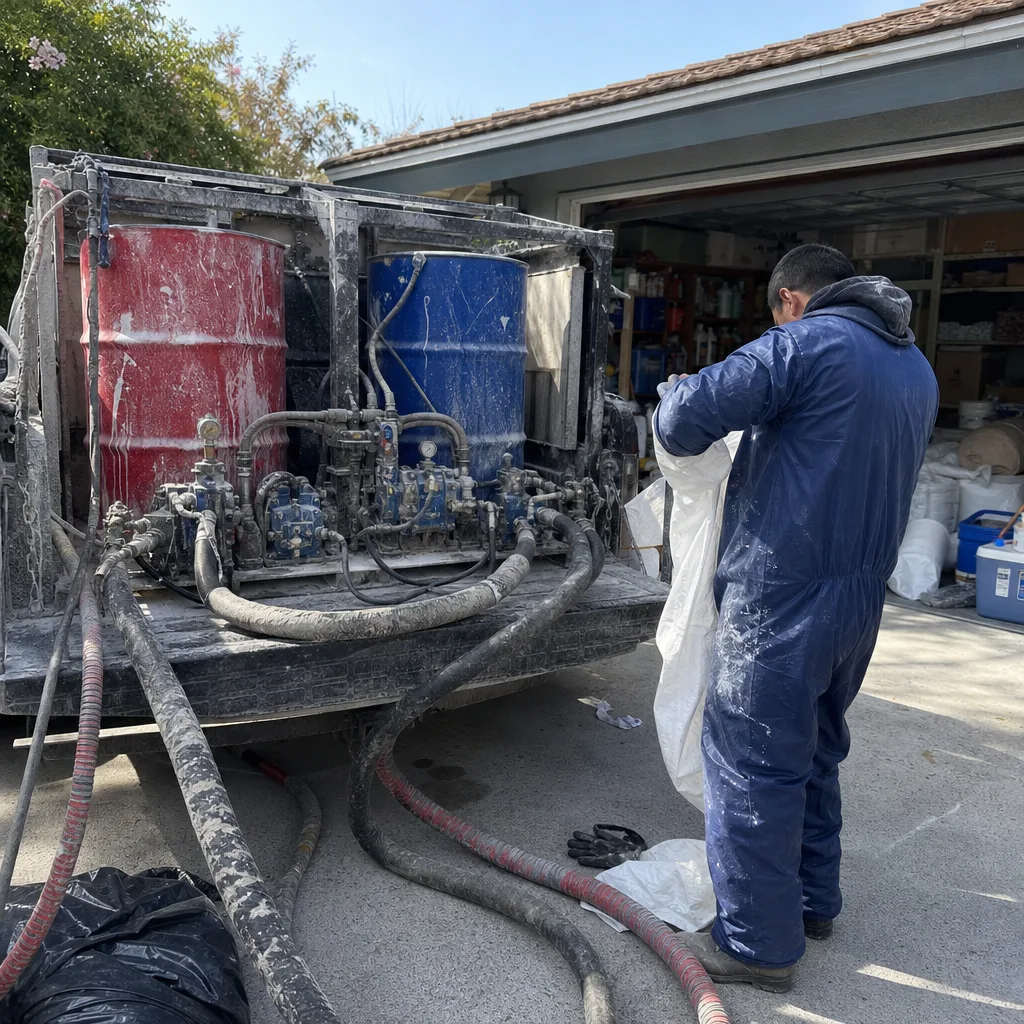
Application. We spray to the specified depth using temperature-controlled equipment, checking density as we go. The foam expands within seconds and cures within hours, though some products need up to 24 hours before re-occupancy depending on ventilation. We’ll tell you exactly when it’s safe to be back in the space.
- 5
Inspection and cleanup. After the foam cures, we check thickness, look for voids, and confirm the air seal is continuous. We remove all masking and protective materials, then walk you through what was installed and where. You’ll know exactly what’s in your walls before we leave.
How Much Does Spray Foam Insulation Cost in Trabuco Canyon?
A typical attic roofline foam job in Trabuco Canyon runs $4,000 to $9,500, while a rim joist-only job lands between $1,500 and $3,500. Crawl space work starts around $2,800 and can reach $7,500 for full encapsulation with closed cell. Wall foam during a remodel runs $3.00 to $6.00 per square foot of wall area. The price of spray foam insulation in Trabuco Canyon varies based on which product you choose, the surface area involved, access conditions, and whether we’re removing old insulation first. For a detailed breakdown, see how much Spray Foam Insulation costs.
What affects the price: foam type is the biggest lever, since closed cell costs more per board foot than open cell. Depth matters too, because more inches means more material and more time. Access challenges like low crawl spaces or steep roof pitches add labor. And if there’s old, failed insulation that needs removal and disposal, that’s a line item on the estimate. The way to avoid overpaying isn’t to find the cheapest bid. It’s to make sure the contractor is installing at the correct depth and actually delivering the R-value they quote. A crew that under-sprays saves themselves material cost at your expense. Our free estimate includes exact measurements, a written material recommendation, and a line-item price so you can see what you’re paying for. Call (877) 679-4725 to schedule one.
Our Service Area Near Trabuco Canyon
Legend Insulation serves Trabuco Canyon and the surrounding South Orange County communities, including Spray Foam Insulation in Rancho Santa Margarita, Spray Foam Insulation in Portola Hills, Coto De Caza, Foothill Ranch, Lake Forest, Mission Viejo, Ladera Ranch, Laguna Hills, Laguna Woods, and Aliso Viejo. Most Trabuco Canyon jobs are scheduled within one to two weeks, and we can often accommodate faster timelines for homeowners with open walls or an active construction schedule. For a full overview of what we do, start at our home page or keep reading below.
Serving Trabuco Canyon, CA — Our Local Coverage Area
We’re based in the Trabuco Canyon area and know this community well. Use the map below to see our service coverage — if you’re nearby, we can almost certainly help.
Frequently Asked Questions About Spray Foam Insulation in Trabuco Canyon
Spray foam insulation is a two-part liquid that expands on contact and cures into a solid foam that both insulates and air-seals in one application. It comes in open cell and closed cell forms, each suited to different spaces and moisture conditions. In Trabuco Canyon homes, it’s most often used at the attic roofline, in crawl spaces, and at rim joists where air leakage is the dominant problem.
Most attic or crawl space foam jobs in Trabuco Canyon are finished in one day, including prep and cleanup. Larger whole-home projects or work involving old insulation removal might run two to three days. We’ll give you a specific timeline at the estimate, and we’ll tell you when the space is safe to re-enter based on the foam’s cure time.
Spray foam insulation in Trabuco Canyon generally runs $2.50 to $7.00 per square foot, with typical attic jobs between $3,800 and $9,500. Rim joist work, crawl space foam, and garage applications all fall within that range depending on scope and foam type. Call (877) 679-4725 for an exact quote, and the estimate is free.
Yes. Legend Insulation is certified to install both Icynene and Demilec spray foam products, covering open cell and closed cell applications. If you have a specific system you want, or you want us to recommend which one fits your space, we’ll work with either. The recommendation is always tied to your home’s specific conditions, not our inventory.
Yes. If you’ve got open walls, a failed insulation install, or a construction schedule that’s slipping, we can typically get a crew to Trabuco Canyon on a faster timeline. Call (877) 679-4725 and we’ll let you know what’s possible that week. We keep scheduling flexibility for exactly these situations.
Both Icynene and Demilec foam products carry manufacturer warranties, and Legend Insulation stands behind the workmanship on every install. Specific warranty terms vary by product and application, so we’ll walk you through what applies to your project during the estimate. The short version: if the foam fails or the air seal doesn’t hold, we fix it.
Clear the work area of stored items, especially in attics and crawl spaces, and move anything fragile away from the access point. We’ll handle floor protection and containment, but having the space clear saves time. We’ll also let you know if you need to vacate the home during application and when it’s safe to return, which varies by product and ventilation.
Schedule Your Spray Foam Insulation Service in Trabuco Canyon Today
Getting a foam estimate from Legend Insulation is free, takes about an hour, and leaves you with a written recommendation you can actually use, whether you hire us or not. Call (877) 679-4725 today and we’ll schedule a walkthrough at your Trabuco Canyon home. No pressure, no obligation, and a straight answer about whether spray foam is the right fix for your house.
Written by Nolan Cassidy, Owner at Legend Insulation, serving Trabuco Canyon and surrounding South Orange County communities with dedicated insulation expertise.