Insulation Company in Corona, CA
Blown in insulation is the most common retrofit we handle in Corona, and for good reason: most homes here were built between the 1980s and late 2000s, when R-13 to R-19 attic batts were standard and air-sealing was an afterthought. Two decades of 100°F summers and Santa Ana wind cycles leave that material settled, thin, and full of gaps. Our team at Legend Insulation specializes in one trade only, so when we inspect a Corona attic we’re looking at it through an insulation lens, not as a roofer or HVAC tech moonlighting on the side. Call us at (877) 679-4725 for a free estimate.
Why Corona Homes Are Different
Corona sits at the crossover between the hot, dry Inland Empire floor and the cooler foothill elevations rising toward the Cleveland National Forest. That split means insulation needs change sharply by ZIP code. Tract homes on the flat west side in 92879 and 92882 fight brutal summer attic heat gain, where radiant temperatures inside an uninsulated attic can climb 40 to 50 degrees above outdoor air. Hillside homes in 92881 and 92883 toward the Santa Ana Mountains run meaningfully cooler, but they face different issues: uneven settling on sloped lots, tricky access, and wildland-adjacent fire-consciousness that makes material choice matter more.
The housing stock itself tells the story. Eastern Corona’s 92880 and 92881 corridor exploded during the building boom with large master-planned subdivisions that still carry builder-grade attic insulation. Our techs routinely find insulation blown thin and settled at the eaves in those tracts, while the same builder’s homes on the cooler 92883 hillside side perform fine. Same complaint from the homeowner, “house won’t stay cool,” but a totally different diagnosis depending on which side of the 15 freeway the house sits on.
Our Main Corona Services
Corona homeowners call us most about two things: upgrading underperforming attic insulation and air-sealing with spray foam. Here’s how each works in this city.
Attic Insulation in Corona
Most Corona attics we enter are dramatically under-insulated for this climate. The California energy code has moved upward over the years, but homes from the 1980s and 1990s were built to older standards that simply don’t hold up against inland summer heat. We inspect the existing depth, check for settling at the eaves, and recommend the right R-value for your side of the city. A flat-lot tract home in 92880 needs a different approach than a canyon-edge house in 92883, and we won’t give you a one-size-fits-all answer. Learn more about what’s involved on our Attic Insulation in Corona page.
Spray Foam Insulation in Corona
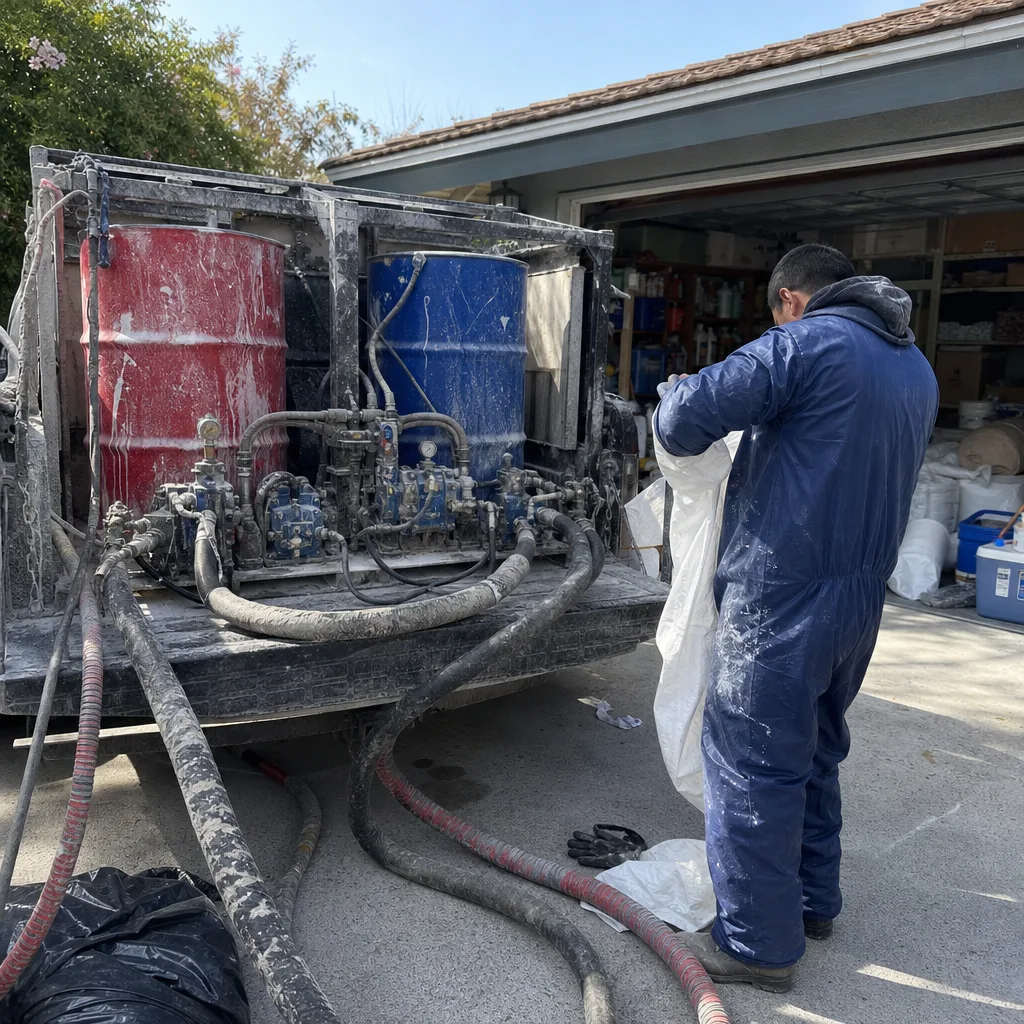
Spray foam solves a specific Corona problem: air leaks. The temperature difference between a 105°F attic and a 75°F living space creates a pressure stack that pulls hot air through every gap in your ceiling. Closed-cell foam air-seals those gaps and adds R-value in one pass. We’re certified in Icynene and Demilec systems, so we can spec either performance tier depending on your roofline, budget, and whether you have a vented or unvented attic. For hillside homes near the wildland-urban interface, we often recommend foam for its air-sealing fire-safety benefits. See the full breakdown on our Spray Foam Insulation in Corona page.
What happens when you call
- 1
A real person answersNo phone trees — you reach a local pro.
- 2
You get an upfront price rangeHonest numbers before anyone is dispatched.
- 3
A background-checked tech heads outLicensed & insured, dispatched right away.
- 4
You approve before work beginsNothing starts until you say go.
Blown In Insulation in Corona
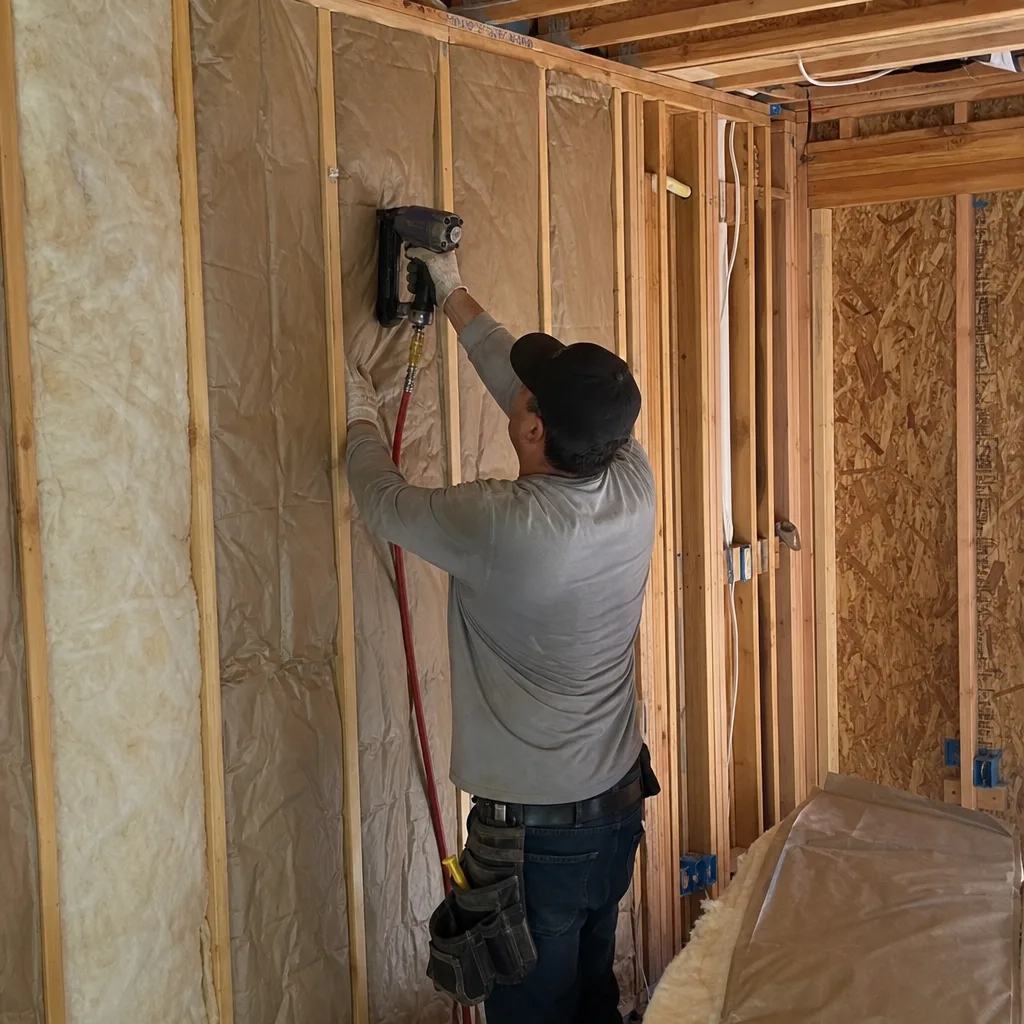
Blown in insulation is the fastest, most cost-effective way to bring a Corona attic up to modern performance. We blow loose-fill material through a hose into the attic floor, filling voids and building R-value depth that batts can’t match. In Corona’s master-planned tracts, this usually means topping off settled fiberglass or cellulose to bring attics from R-13 or R-19 up to R-38 or R-49. For a deeper look at the method itself, see our Blown In Insulation service hub.
Cellulose Insulation
Signs you need it
Your existing attic insulation has settled to below the top of the ceiling joists, or you feel temperature swings between rooms on hot afternoons.
What it costs in Corona
Blown-in cellulose in Corona typically runs $1.10 to $1.50 per square foot installed, depending on target R-value and current settled depth.
How we do it
We remove or assess any failed material, air-seal the attic floor penetrations, then blow GreenFiber or equivalent cellulose to the specified depth, raking it level to eliminate low spots.
Blown In Attic Insulation
Signs you need it
Your upstairs rooms won’t hold temperature, your AC runs constantly in summer, or you can see bare spots and thin coverage when you peek into the attic.
What it costs in Corona
Full blown-in attic insulation in Corona generally falls between $1,500 and $3,600, depending on square footage and the R-value you’re targeting.
How we do it
We calculate the square footage and current R-value, determine how many inches of material are needed to hit your target, then blow the insulation evenly and verify final depth with a measuring gauge.
What Blown In Insulation Costs in Corona
| Item | Typical range in Corona |
|---|---|
| Blown-in fiberglass, R-38 over 1,200 sq ft | $1,800 – $2,600 |
| Blown-in cellulose, R-49 over 1,200 sq ft | $2,100 – $3,200 |
| Attic air-sealing, standard perimeter | $700 – $1,400 |
Several things push the price up in Corona: vaulted or cathedral ceilings that limit access, older homes with vermiculite that requires abatement before we can blow over it, and attics with low clearance or excessive roof pitch. Our quotes are itemized line by line before we start, and the price we quote is the price you pay.
Does blown in insulation actually keep a Corona house cooler?
Yes. In Corona’s 100°F summers, most of the heat entering your living space comes downward through the attic. Building from R-19 to R-38 or R-49 cuts that heat gain dramatically. Blown-in material also fills gaps and odd-shaped cavities better than batts, which directly reduces hot spots in bedrooms and hallways. Most customers feel the difference within the first full week.
Can you blow insulation over existing attic insulation in Corona?
In most cases yes. If the existing material is dry, pest-free, and not compressed, we can blow new fiberglass or cellulose directly over it to reach your target R-value. If it’s full of rodent droppings, moisture-damaged, or contains vermiculite, we’ll recommend removal first. We’ll tell you which path applies after the inspection.
Brands We Service in Corona
We carry and install eight major insulation brands, including CertainTeed, Icynene, Demilec, and GreenFiber. Because we stock competing brands across every insulation category, the spec is driven by your Corona home’s performance needs, not by what happens to be loaded on the truck that day. Most materials are available same-week for Corona jobs, not special-ordered. See our full our brands list.
Pricing for Insulation Company in Corona, CA
| Service | Typical range in Corona |
|---|---|
| Attic insulation upgrade, 1,200 sq ft | $1,500 – $3,600 |
| Blown-in fiberglass, R-38 | $1,800 – $2,600 |
| Blown-in cellulose, R-49 | $2,100 – $3,200 |
| Spray foam attic air-seal, standard perimeter | $700 – $1,400 |
| Spray foam full attic encapsulation | $4,000 – $8,000 |
| Mineral wool batt installation, per sq ft | $1.80 – $2.60 |
| Attic air-sealing, whole attic | $800 – $1,800 |
| Cantilever and rim joist sealing | $900 – $2,200 |
In Corona, pricing moves most on attic access and existing conditions. A clean, walkable attic on the flat west side is a different job than a low-clearance hillside attic off 92883 with tight corners and limited ventilation. You’ll get a fixed, itemized quote before any material is ordered, and we don’t tack on surprise charges after the work is done.
Neighborhoods We Serve in Corona
We work across all of Corona’s ZIP codes, from the established tract neighborhoods east of the 15 to the older homes nearer downtown and the hillside communities climbing toward the Santa Ana Mountains. Most Corona jobs are scheduled within 3 to 5 business days of the initial inspection.
- Eastvale Gateway area, 92880
- Sierra del Oro, 92882
- Eagle Glen, 92883
- Dos Lagos, 92883
- Historic downtown core, 92882
Service Area – Cities Near Corona
Legend Insulation has served Corona since 2015, and we also run crews across the neighboring communities. If you’re just over the line in Home Gardens, CA or El Cerrito Corona, CA, we can usually reach you the same week. We also handle jobs throughout Eastvale, CA and Norco, CA, where the housing stock and attic challenges are very similar to what we see in eastern Corona.
Serving Corona, CA — Our Local Coverage Area
We’re based in the Corona area and know this community well. Use the map below to see our service coverage — if you’re nearby, we can almost certainly help.
FAQs About Insulation Company in Corona
We typically schedule Corona estimates within 2 to 4 business days of your call. Because our crews are dispatched from nearby, not from Orange County or LA, we can often work same-week for smaller attic jobs. If you’ve got an urgent issue like exposed wiring in a torn-up attic, tell the dispatcher and we’ll do our best to move you up.
Attic insulation upgrades are almost never subject to HOA review, since the work is hidden inside the structure and doesn’t change your home’s exterior appearance. Some newer planned communities in the 92880 and 92881 corridor have architectural guidelines, but insulation is a mechanical upgrade, not a visible modification. We’ve handled jobs across dozens of Corona HOAs without a rejection.
Yes. For Corona builders and remodelers, we spec insulation from eight national brands across fiberglass, mineral wool, spray foam, and cellulose. For existing homeowners, we focus on attics, cantilevers, and rim joists, which is where most of the energy loss actually happens in this city’s housing stock. The same crew quality applies to both.
What happens when you call
- 1A real person answersNo phone trees — talk to a local insulation pro.
- 2You get an upfront price rangeHonest numbers before anyone is dispatched. No surprises.
- 3A background-checked tech heads outLicensed & insured, typically same-day.
- 4You approve before work beginsNothing starts until you say go.
What Corona Customers Say
"Plastic laid from the front door to the attic hatch and they vacuumed the hallway afterward."
— Andres Mendoza"Installed baffles at the soffits so the new insulation didn't block the ventilation, which the previous contractor apparently never considered."
— Vivian Kim"Handled the utility rebate paperwork, which knocked a real amount off the final cost."
— Maria Reyes